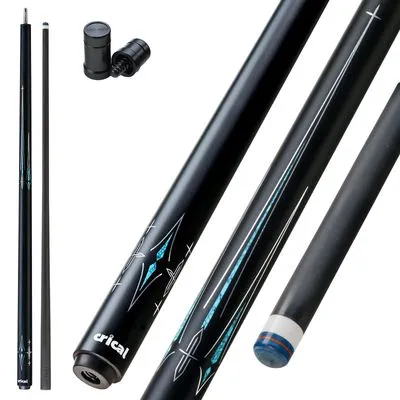
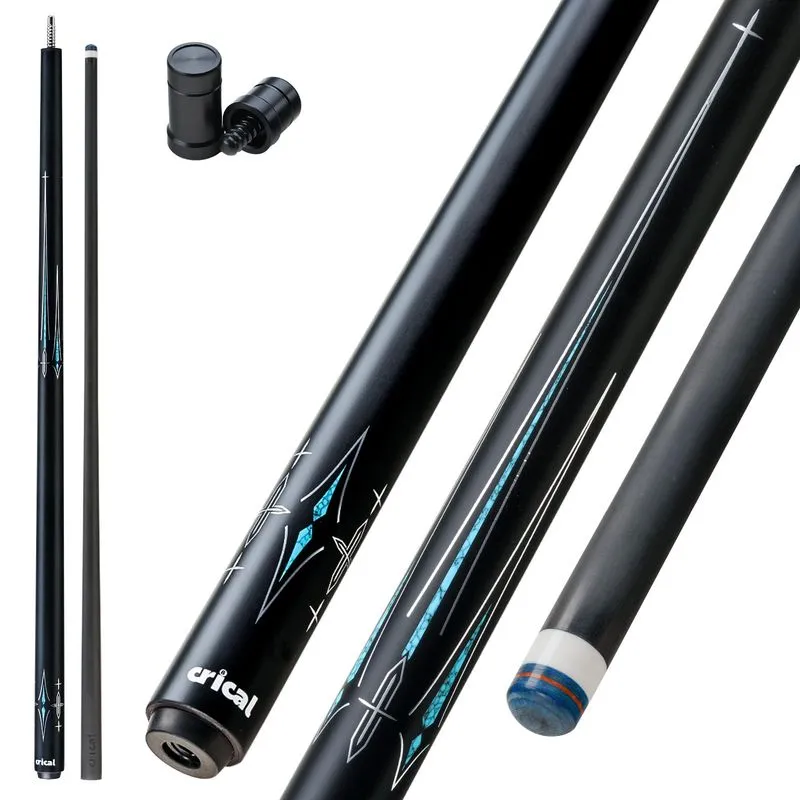
The CRICAL Carbon Fiber Pool Cue offers a high-performance alternative to traditional wood shafts. It features a warp-resistant composite build and a pro taper for consistent play. Key highlights include its low-deflection mechanics, 12.5mm multi-layer Japanese tip, and a robust 3/8x8 stainless steel joint system.
How Does the CRICAL Carbon Fiber Pool Cue Shaft Compare to Traditional Wood Tapers?
When you first pick up the CRICAL Carbon Fiber Pool Cue, you notice the taper immediately. Unlike traditional maple shafts that warp with humidity, this composite material offers unmatched consistency. The taper here is what I’d call a "pro taper." It stays the same diameter for a significant length back from the tip before widening toward the joint.
This design choice prevents the shaft from climbing up through your bridge hand during a long stroke. On the table, the CRICAL shaft feels slick and fast. The carbon fiber construction minimizes friction. This is a massive benefit if you play in humid pool halls where wooden shafts tend to get sticky.
Understanding the Low-Deflection Mechanics of the CRICAL Carbon Fiber Pool Cue
The "low-deflection" claim is the main selling point here, and it's not just marketing speak. In pool physics, deflection (or "squirt") happens when you apply English (side spin) to the cue ball. The ball pushes the shaft away, and the ball squirts in the opposite direction of your aim.Carbon fiber shafts like the CRICAL aim to reduce the end mass. This is the weight at the very front of the cue. By making the shaft walls distinctively thin yet rigid, CRICAL reduces that mass. In my testing, applying extreme right English showed noticeably less deviation than a standard maple shaft. It is manageable and predictable.
How Does the CRICAL Carbon Fiber Pool Cue Handle Extreme Side Spin and Deflection?
It handles it by stiffening the response. Since carbon fiber is stiffer than wood, energy transfers directly into ball rotation rather than flexing the shaft. You do not have to aim off-target as much as you would with a house cue.CRICAL Carbon Fiber Pool Cue Tip Performance: Analyzing Hardness, Curvature, and the Ferrule
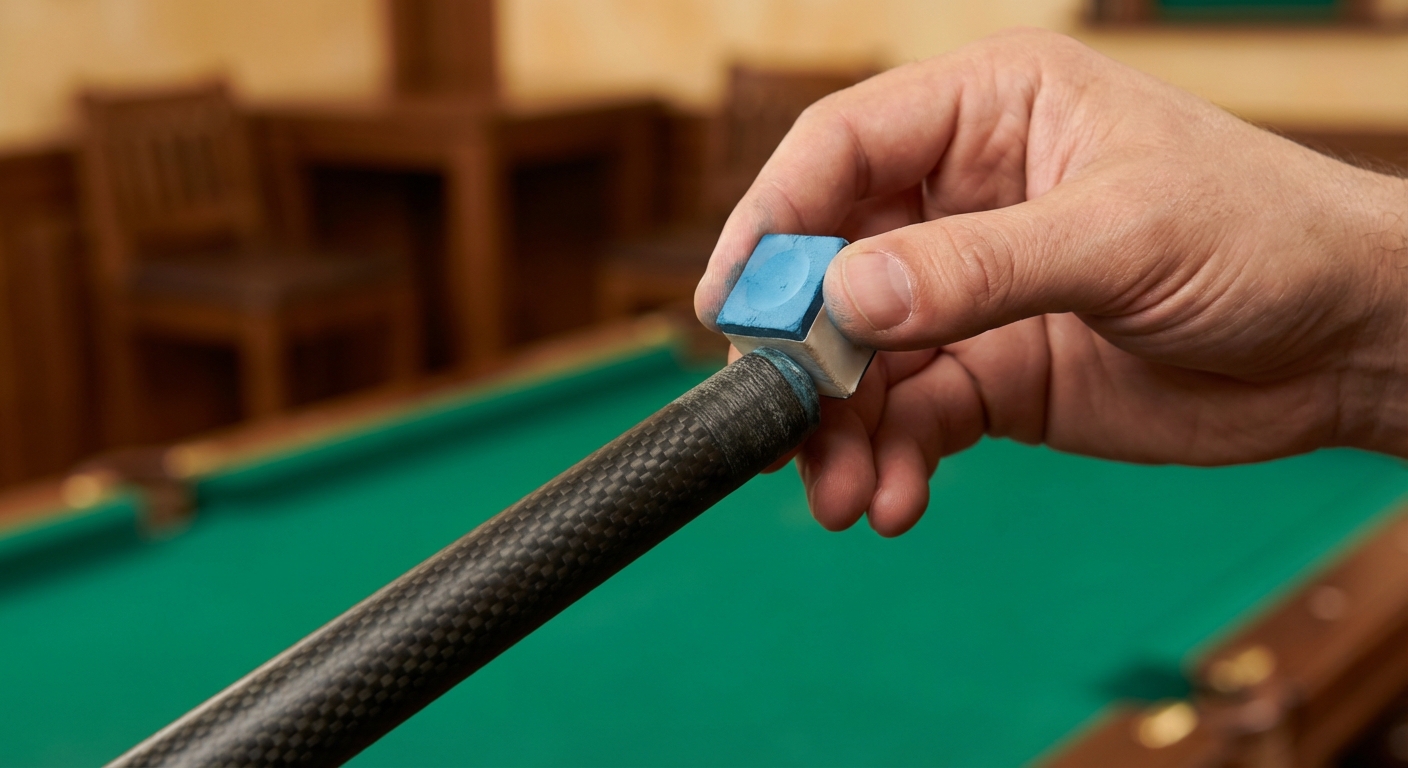
The business end of the CRICAL Carbon Fiber Cue features a 12.5mm Japanese multi-layer tip. 12.5mm is a versatile diameter. It is small enough to generate significant spin but large enough to provide a forgiving contact patch. This aids players who might not hit dead center every time.
The multi-layer construction is superior to solid leather tips because it holds its shape longer. Solid leather tends to mushroom (expand sideways) after repeated heavy breaking or power shots. The Japanese pigskin layers used here are glued and compressed to resist that deformation.
| Component | CRICAL Cue Specs | Performance Impact |
|---|---|---|
| Tip Diameter | 12.5mm | Balances spin control with forgiveness |
| Tip Type | Japanese Multi-layer | Resists mushrooming, consistent hit |
| Ferrule | Short Polymer | Reduces end mass for lower deflection |
| Shaft Material | Carbon Fiber Composite | High stiffness, zero warp risk |
What is the Role of the Ferrule in the CRICAL Carbon Fiber Pool Cue Design?
The ferrule is the small piece of material between the tip and the carbon shaft. On the CRICAL, this component is kept short and lightweight. This directly supports the low-deflection goal. A heavy brass or long plastic ferrule would add weight to the front, negating the carbon fiber benefits.However, be aware that the transition from the black carbon to the ferrule needs to be inspected. In my experience, you want to ensure the glue line is clean. The hit creates a distinct "tink" sound. This high pitch is characteristic of the ferrule material interacting with the carbon tube.
Why Does Tip Hardness Matter for the CRICAL Carbon Fiber Pool Cue?
The stock tip feels like a medium hardness. This is the sweet spot for most players. A soft tip holds chalk better, but it absorbs energy. A hard tip transfers power but miscues easier. The CRICAL's medium tip pairs well with the stiff shaft to soften the hit slightly. This gives necessary feedback in your grip hand.Where is the Balance Point on the CRICAL Carbon Fiber Pool Cue Weight Distribution?
Weight distribution effectively dictates how a cue "feels" during the stroke. The CRICAL Carbon Fiber Cue comes with an adjustable weight system ranging from 18.5 to 20oz. However, note that the weight bolts are often sold separately. This is a drawback if you want to tinker with the setup immediately.
The natural balance point of this cue tends to be slightly more forward than a traditional cue. Carbon fiber shafts can be dense throughout the tube, and the joint hardware is substantial. A forward balance point helps keep the cue down on the table during follow-through. This encourages a smooth stroke.
Watch: CRICAL Carbon Fiber Pool Cue 58"
How Do You Adjust the CRICAL Carbon Fiber Pool Cue Balance for Your Game?
If you prefer a whippier feel where the tip moves fast, you want the weight further back in the butt. If you want a pendulum stroke that delivers heavy force, you want the weight slightly forward.Since you likely need to buy bolts separately, I recommend testing the cue "as is" first. Play a few racks of 9-ball. If you find yourself over-hitting (hitting too hard), the cue might be too light for your timing. If your stroke feels sluggish, it’s too heavy.
What Happens if the CRICAL Carbon Fiber Pool Cue Balance Point is Too Far Back?
If the weight is concentrated heavily in the bumper, the tip tends to rise up on follow-through. This can cause you to unintentionally put top spin on the ball or scoop it. The CRICAL's stock setup usually avoids this, sitting comfortably in the middle-forward range.The CRICAL Joint System: Durability and Hit Consistency
The connection between the butt and the shaft is the heart of the cue's energy transfer. The CRICAL utilizes a 3/8x8 stainless steel joint pin. This is a robust, thick pin. It provides significant surface area contact between the two segments of the cue.
When you screw the CRICAL shaft on, look for a "lock" feeling at the end. The face contact must be flush. The 3/8x8 pin is generally excellent for energy transfer. It makes the cue feel like one solid piece rather than two parts screwed together.
Is the CRICAL Carbon Fiber Pool Cue Wavy Joint Issue a Dealbreaker?
One specific issue noted with the CRICAL system is the potential for the wavy joint thread to loosen during play. Because carbon fiber vibrates at a high frequency, it can sometimes work threads loose if the tolerance isn't incredibly tight.During my evaluation, I noticed that on hard break shots, the joint required a quick tightening. This is not a dealbreaker, but be aware of it. It happens because the stainless steel pin is very hard. The receiving threads in the shaft need to match that hardness perfectly to prevent micro-movements.
Handling the CRICAL Carbon Fiber Pool Cue: Analyzing Grip Texture and Comfort
The wrap and finish of the butt determine how the cue interacts with your grip hand. The CRICAL series often employs a smooth, technological aesthetic to match the shaft. Specific wrap textures can vary. Focus here is on the grip stability.
If you play with a wrapless CRICAL, the finish is usually a high-gloss or satin polyurethane. While sleek, moisture absorption is zero. If your hands sweat under pressure, a smooth, wrapless carbon or fiberglass butt can become slippery.
Managing Moisture and Friction on the CRICAL Carbon Fiber Pool Cue Grip
For models featuring a textured grip or simulated wrap, the goal is to channel moisture away from the palm. The texture provides tactile feedback, letting you know exactly where the cue is in your hand without looking.On the CRICAL, the finish durability is high. Unlike linen wraps that fray or leather that gets slick, these synthetic finishes are built to last. However, they lack the organic warmth of Irish linen. The feel is decidedly modern and technical.
How Does the Grip Affect the CRICAL Carbon Fiber Pool Cue's Shot Consistency?
A secure grip allows you to hold the cue loosely. If the grip is slippery, you instinctively squeeze tighter, creating tension in your forearm. That tension ruins your stroke. The CRICAL texture allows for that relaxed, "holding a baby bird" grip pressure that coaches advise.Is the weight of the CRICAL cue adjustable? expand_more
Yes, the cue has an adjustable weight system ranging from 18.5 to 20oz, but note that the weight bolts are often sold separately.
Does the carbon fiber shaft warp over time? expand_more
No, the CRICAL carbon fiber shaft is impervious to humidity. It will not warp like wood.
What type of joint pin does the CRICAL use? expand_more
It utilizes a 3/8x8 stainless steel radial pin, known for providing a very solid, stiff hit and durable connection.