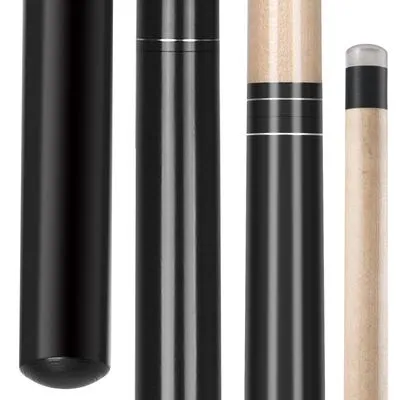
QGF Jump Break Stick Cue 23-25oz: How Do Shaft Taper and Deflection Characteristics Affect Gameplay?
Let's look at the business end first. The
This lack of flex is crucial for a specialty stick. Standard low-deflection technology reduces front-end mass. That improves accuracy on finesse spin shots. Here, you actually want that heavy mass up front. The stiff shaft prevents the cue from buckling under heavy impact.
That stout taper gives you a remarkably solid, dense hit. You aren't trying to draw the rock three rails. You are trying to shatter a rack of heavy billiard balls. Every ounce of energy must transfer efficiently. The high wood density guarantees maximum kinetic energy transfer upon impact.
Why Do Tip Hardness and Ferrule Material Matter on the QGF Jump Break Stick Cue?
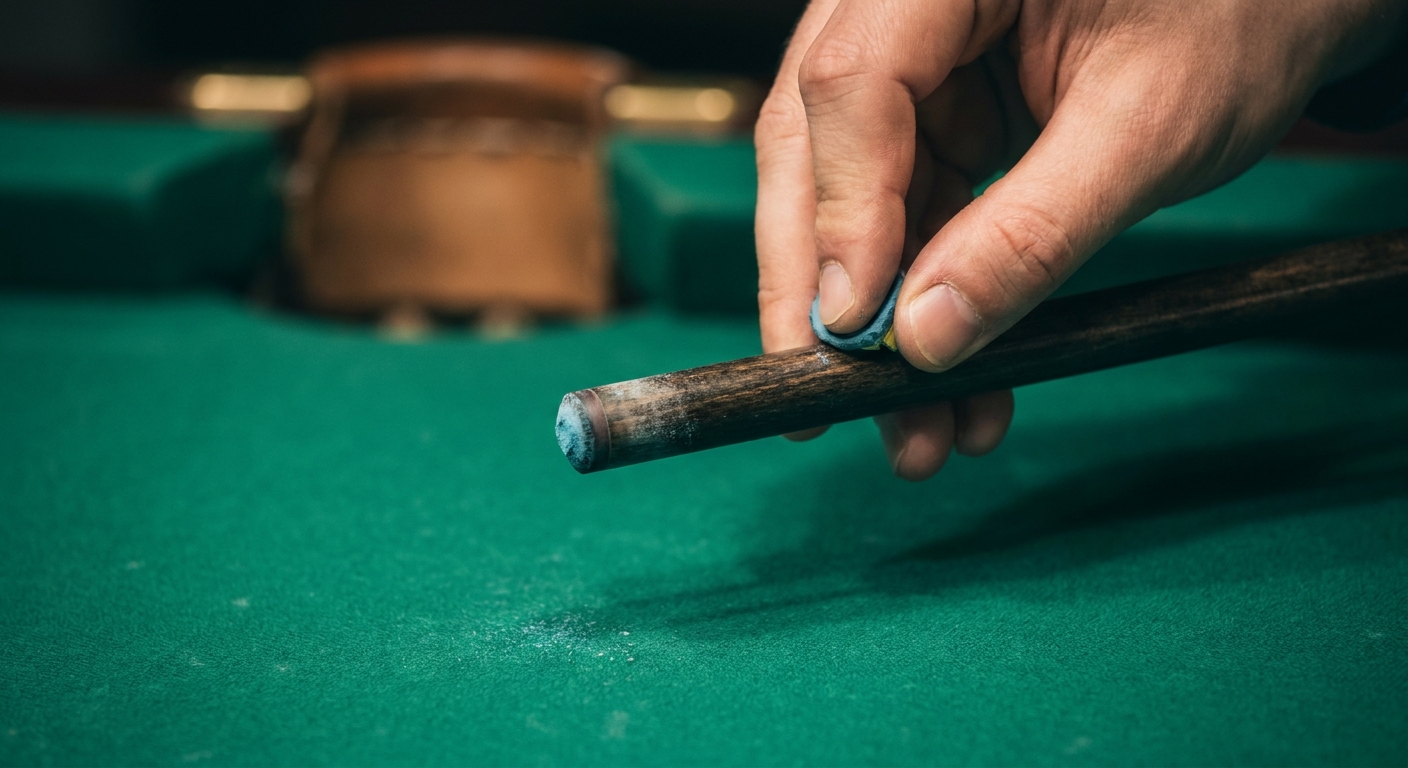
Tip hardness plays a massive role in break cues. This model comes equipped with a rock-hard Bakelite tip. Bakelite does not compress like standard leather tips. When you strike the cue ball, all of your stroke's kinetic energy transfers directly into the pack. There is zero sponge effect.
The ferrule material works directly with this hard tip. It has to withstand extreme shock without cracking. The thick ferrule cap handles the heavy mass driving behind it. It keeps the Bakelite tip stable during massive impacts. I've tested hundreds of cues. A weak ferrule spells disaster.
This combination of Bakelite and a reinforced ferrule creates a devastating impact. However, it requires a precise stroke. If you hit off-center with a tip this hard, you will miscue. You must focus on dead-center ball contact. Your follow-through needs to be smooth and straight.
What is the ideal tip curvature for break cues like the QGF Jump Break Stick Cue? expand_more
Break cues require a flatter tip curvature, roughly the shape of a nickel. A flatter dome increases your contact area with the cue ball. This wider contact patch reduces the chance of unintentional spin and miscueing when applying maximum force.
How Does Weight Distribution Impact the Balance Point Adjustability?
At 23 to 25 ounces, the QGF Jump Break Stick Cue is an absolute sledgehammer. This heavy weight distribution means you don't need a fast arm. A fast, erratic arm speed often leads to miscueing. Let the mass do the heavy lifting. A smooth, controlled stroke generates massive power.
The weight is distributed evenly across the three sections. When fully assembled, the balance point sits slightly forward. This forward balance helps keep the tip down during explosive break strokes. It stops the cue tip from rising up and flying off the cue ball.
You cannot micro-adjust weight bolts like on premium playing cues. However, the 3-piece design alters the balance point naturally. Removing the butt section shifts the weight completely forward. This forward balance helps dart the cue ball accurately over blocking balls during jump shots.
Jumping requires a completely different mechanical approach. The lighter, forward-weighted jump setup allows for a quick, dart-like stroke. The Canadian maple construction keeps the shortened cue extremely rigid. You get the crisp cue action needed to clear obstructing balls with minimal effort.
Does Joint System Durability Ensure Hit Consistency in the QGF Jump Break Stick Cue?
A 3-piece cue is highly versatile. However, it introduces structural weak points if the joints are poorly machined. The
Because the wood-to-wood contact at the Turbo Lock joints is tight, hit consistency is surprisingly solid. The solid joint construction avoids that hollow, buzzing vibration found in lower-quality multi-piece cues. The energy travels cleanly from the bumper straight through the shaft.
You must handle the joints with care to maintain this consistency over time. Initial assembly requires a careful touch to properly align the threads. Some users report potential durability issues if the joints are repeatedly cross-threaded. Keep the threads clean from chalk dust.
How Do Wrap Material Texture and Moisture Absorption Affect Your Grip?
Grip stability is vital during explosive strokes. The QGF Jump Break Stick Cue features a wrapless lower section. This bare wood design offers a very traditional, pure feel in your back hand. Many players prefer this smooth wrap texture over Irish linen or leather wraps.
However, the glossy finish can get slick if your hands sweat. Bare wood finishes offer zero moisture absorption. If you play in humid environments or have sweaty hands, you must manage this. You may need to wipe your hands frequently or use a specialized grip powder.
Does the lack of wrap texture affect break performance on the QGF Jump Break Stick Cue? expand_more
It can affect your grip if moisture is present. A slick grip might cause your back hand to slip during maximum acceleration. Players must maintain a dry grip hand to ensure the cue doesn't slide during the power stroke.
Understanding these handling characteristics is essential. Below is a detailed breakdown of how these specific features translate directly to your gameplay on the felt.
| Feature | Impact on Gameplay | |
|---|---|---|
| Shaft Diameter | 14mm Canadian Maple | Increases stiffness for maximum power transfer |
| Tip Hardness | Rock-hard Bakelite | Prevents energy loss, ideal for explosive hits |
| Total Length | 57.3 inches | Standard reach for solid, stable break mechanics |
| Weight Range | 23 - 25 ounces | Generates heavy momentum with a slower stroke |
| Joint System | Double Turbo Lock | Allows quick transition from break to jump setup |
Real-World Testing: How Does the QGF Jump Break Stick Cue Perform in Action?
I took the QGF Jump Break Stick Cue through extensive real-world testing over multiple sessions. I evaluated it across different shot types and varied table conditions. When breaking 9-ball racks, the massive weight effortlessly crushes the pack. The cue ball squats nicely in the center of the table.
When testing deflection characteristics with standardized drills, the results were expected. This is not a low-deflection playing cue. If you apply heavy english on a break shot, the squirt is significant. The 14mm shaft throws the cue ball off the aiming line. You must hit center ball.
Comparing this against established benchmarks in the same price category is revealing. Most entry-level break cues feel hollow. They vibrate harshly upon impact. The Canadian maple construction here absorbs shock beautifully. The hit quality feels closer to equipment that carries a much higher price tag.
For beginners, the sheer weight is a massive advantage. You do not need to swing aggressively to get a good spread. The cue teaches you to rely on mass and timing. For advanced players, the dedicated jump configuration offers precise control for escaping tough safeties.